Wildfire Emergency Access Roads
When wildfire is in the area, access matters. Crews need a route that fits trucks, water tenders, and equipment. Emergency access roads help get responders in and out safely, and they support mitigation work year-round.
We build access routes, service roads, and cleared pathways on real terrain. That can mean steep grades, soft shoulders, tight turnarounds, and drainage that needs to be corrected. The goal is a route that stays usable when conditions are demanding.
The Importance of Access in Wildfire Preparedness
Many rural and forested properties have limited road infrastructure. Narrow driveways, overgrown edges, or undeveloped ground can slow down response. In some areas, the first problem is simply turning a truck around without backing for long distances.
A dedicated access route improves entry points, equipment mobility, and staging for mitigation work. It can also support firebreak construction, fuel removal, and maintenance access after the initial work is done.
Our Approach
We start with a site review and route planning. We look at grades, soil conditions, existing trails, and where water crosses the line. We also check for pinch points, turnarounds, and safe pullouts.
From there, we build a road that matches the use. That often includes clearing, stripping organics, shaping the subgrade, placing road base, and compacting. We add drainage where needed so the road does not turn into a runoff path during the first heavy rain.
If the route will be used by emergency vehicles, we focus on stability and predictable travel surfaces. If it will also be used for mitigation work, we plan staging areas and equipment access so the site stays organized.
Safety and Environmental Considerations
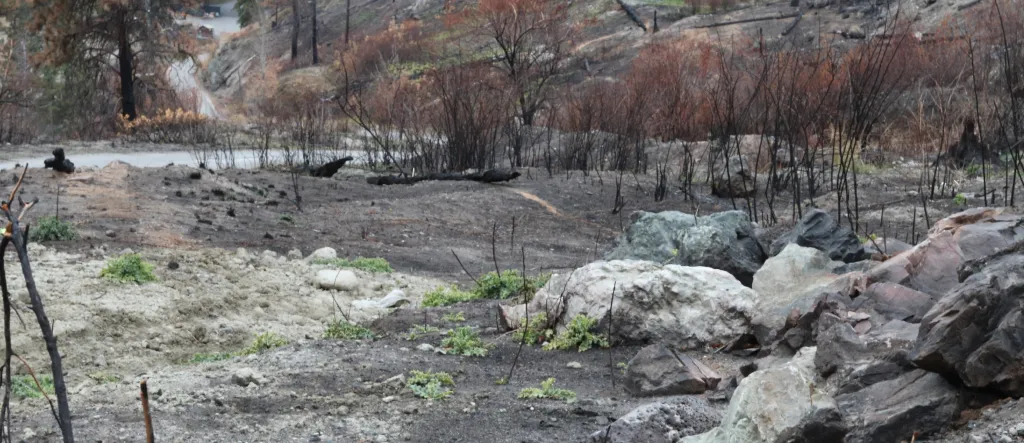
Road work in burn zones comes with hazards. Trees can be unstable, ground can be soft, and visibility can be limited. We control work zones, manage traffic and access, and build in a way that reduces rollover and edge risks.
Drainage planning is part of protecting the site. We shape grades, install ditches or culverts where needed, and reduce sediment movement into low areas. This helps the road hold up and helps protect what is downhill.
Working with Property Owners and Communities
Emergency access often ties into shared roads, rights-of-way, or adjacent properties. We coordinate with landowners, property managers, and local groups when the route affects others. Clear communication keeps the work predictable and reduces downstream drainage issues.
If you want to improve access for wildfire season, we can start with a site assessment and a practical route plan.