Wildfire Prevention and Risk Reduction
We had a dry winter in the Okanagan, and that usually means fire season can turn serious fast. A lot of wildfire damage starts with simple fuels that are already sitting on a property. Deadfall, brush piles, tall grass, cedar hedges, dense pine needles, wood piles against buildings, and overgrown areas that have not been touched for years.
Rock Hard Excavating provides practical, cost effective wildfire prevention services focused on reducing risk before fire season hits. The goal is simple. Remove easy burn, slow how fire moves, and give firefighters a better chance if a wildfire gets close.
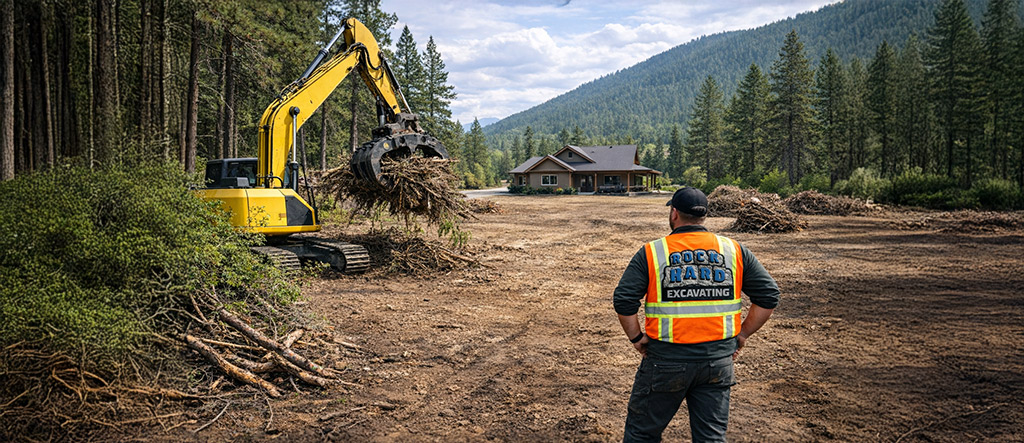
What Wildfire Prevention Means in Practice
Wildfire prevention is not one single task. It is a combination of fuel reduction, access planning, land shaping, and smart layout around homes, shops, and critical areas. Most properties in the Okanagan have more burnable material than people realize, especially acreages, rural driveways, and hillside homes in the forest interface.
This work is about making your property harder to ignite, easier to defend, and safer for your family, your neighbours, and crews who may have to respond.
Preemptive Fuel Reduction and Cleanup
Fuel reduction is the foundation of wildfire prevention. We remove or reduce the materials that allow a fire to build heat and spread quickly across a property.
Common fuels we deal with around Kelowna and the Okanagan include:
- Deadfall, windfall, and downed timber
- Brush, thick undergrowth, and ladder fuels that carry fire into trees
- Overgrown areas that have become one continuous fuel bed
- Pine needles, dry organic build-up, and heavy ground litter
- Old burn piles and scrap wood sitting close to structures
- Vegetation crowding driveways, access routes, and buildings
Firebreaks and Defensible Space
Firebreaks are cleared strips where vegetation and surface fuels are removed to slow down fire spread. Defensible space is the larger strategy around homes and key structures. It is the spacing, cleanup, and layout that reduces the chance of ignition.
On the right property, a well planned firebreak and a clean defensible space can be the difference between a close call and a total loss. We do on-site assessments and build a plan that fits your terrain, access, and budget.
Access Roads and Emergency Access Improvements
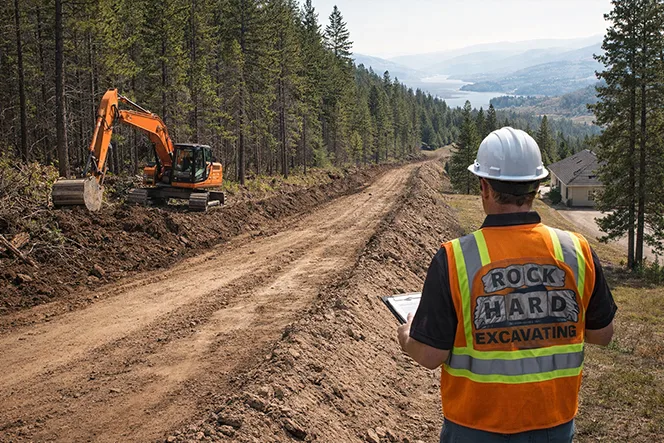
When wildfire risk climbs, access matters. Tight driveways, soft shoulders, overgrown routes, and no place to turn around can become a serious problem. If crews cannot get in quickly and safely, options shrink.
We can improve access by clearing and widening where it makes sense, building or repairing rough access roads, and creating practical turnarounds or pull-outs so equipment can move without getting trapped.
Pre-Wildfire Drainage and Erosion Risk Reduction
Drainage is not only a post-wildfire issue. It matters before fire season too. Grading, ditches, swales, and runoff paths affect how your property holds up in a storm. If a fire does happen and vegetation is lost, the first hard rain can turn into washouts, erosion, and debris moving downhill.
We look at water flow as part of prevention. The goal is to guide runoff to a safe place, protect critical areas, and build resilience into the land. Depending on the site, that can include:
- Minor grading to control where water travels
- Swales and shallow trenches that reduce erosion risk
- Ponds or holding areas where practical to slow runoff
- Drainage improvements along access roads and driveways
How We Keep It Cost Effective
A lot of property owners want to reduce risk, but they also want a plan that stays reasonable. We approach wildfire prevention with common sense. We identify the highest risk areas first, then focus on the work that delivers the biggest impact for the least cost.
Sometimes that is simple cleanup and removal. Sometimes it is strategic thinning and firebreak work. Sometimes it is access and drainage. We will tell you what matters most on your property and why.
Our Experience in the Okanagan
The Okanagan Valley is no stranger to wildfires. We have been involved in both prevention work and post-wildfire cleanup. That experience changes how you plan. We understand what gets missed, what fails first, and what makes recovery harder than it needs to be.
That is why we push for doing the work before fire season. It is safer, simpler, and far less expensive than dealing with the aftermath.
Safety and Environmental Considerations
Wildfire prevention work comes with real risks. Steep ground, dry conditions, unstable trees, and hidden debris can all create hazards. We plan each job carefully and work with strict safety standards to protect your property and our crew.
We also respect the land. Fuel reduction is not about stripping everything. It is about smart removal, clean separation, and reducing continuity of fuels while keeping the property healthy and stable.
When to Book Prevention Work
If you are thinking about doing this work, earlier is better. Once fire season ramps up, schedules tighten and conditions change quickly. Prevention is most effective when it is done before extreme heat and wind arrive.
Request a Practical Site Plan
If you have an acreage, a rural driveway, a hillside property, or a yard that backs onto forest, we can help you reduce risk and build a simple plan that fits your land. You do not need a massive project to make a real difference.
Call us and we will talk through what you are trying to protect, what you have on site, and what the most cost effective next step looks like.